
Living with Wood
Meant to last beyond one owner

Living with Wood
Meant to last beyond one owner
Our surfaces are designed to age with use, not resist it entirely.
Solid wood carries light, wear, repair, and maintenance as part of its history rather than failure. The character it develops over time is part of the material itself.
With proper care, hardwood can endure decades of use and evolving style.
Daily Use
Solid wood is durable, but not indestructible. Daily use will leave marks, particularly on high-use surfaces such as islands, dining tables, and work areas.
Regular application of mineral oil and wood conditioner helps reduce moisture absorption, minimize staining, and lessen the appearance of knife marks and surface wear.
Wood is meant to be used confidently — with an understanding that use will leave a record.
Different finish systems respond differently to cutting, staining, and maintenance.
Explore Wood Finish Options →
Many owners view gradual wear as part of the material’s character rather than damage. Small impressions, softening edges, subtle finish variation, and signs of use develop with time and daily use.
To help preserve the surface:
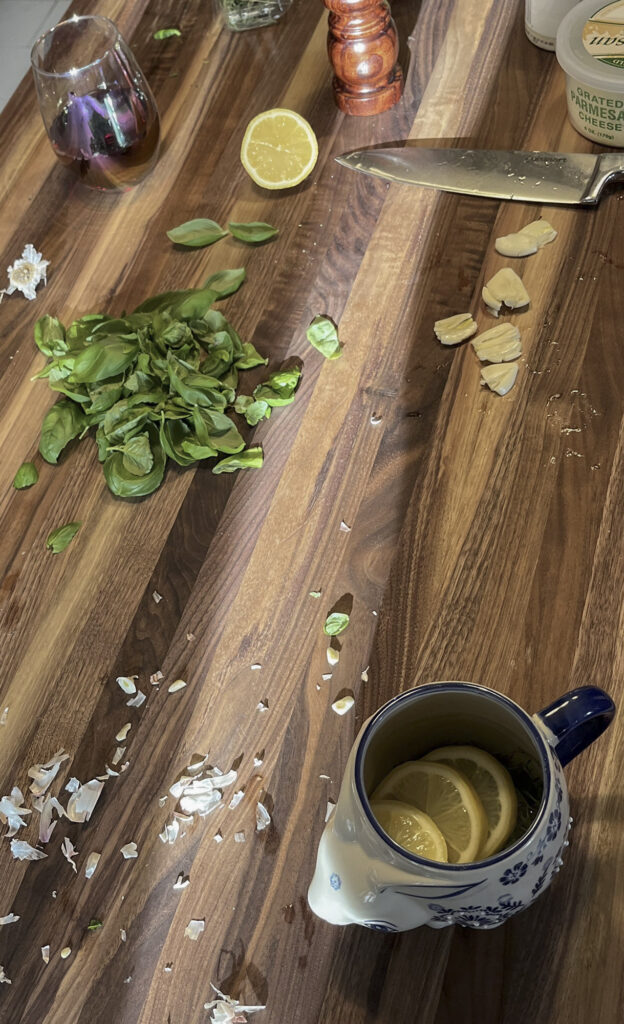
Certain substances — particularly wine, oils, strongly pigmented foods, acidic liquids, and standing moisture — may stain or discolor wood if left for extended periods.
Moisture & Movement
Allow for Movement...
Wood responds to changes in humidity throughout the year. As moisture levels rise and fall, the wood fibers absorb and release moisture from the surrounding environment, causing the material to expand and contract.
This movement occurs across the grain, not along its length. Face grain and edge grain surfaces expand and contract in width as humidity changes, while length remains effectively unchanged. End grain surfaces move in multiple directions and typically experience more significant expansion due to the exposed wood fibers.
Movement can become more pronounced during significant indoor humidity changes — particularly when forced-air heating, air conditioning, or evaporative cooling systems begin running seasonally.
Because solid wood is constantly responding to its environment, slight dimensional changes, shifting reveals, minor gaps, or subtle variation where wood meets stone, metal, or other fixed materials should be expected. A hardwood surface that aligns perfectly with adjacent materials during one season may not remain perfectly flush year-round.
Proper design, fabrication, and installation account for this movement rather than attempting to eliminate it entirely. Maintaining a stable indoor environment helps support long-term performance.
... But Restrain to Control Deformation
Solid wood does not remain perfectly flat or static. As humidity changes, the material continually responds by expanding, contracting, and subtly shifting toward the natural geometry of the tree from which it came.
This is why traditional solid wood furniture relied on structural elements such as aprons, breadboards, battens, and floating joinery. These details were not decorative — they were designed to support the wood while still allowing movement to occur.
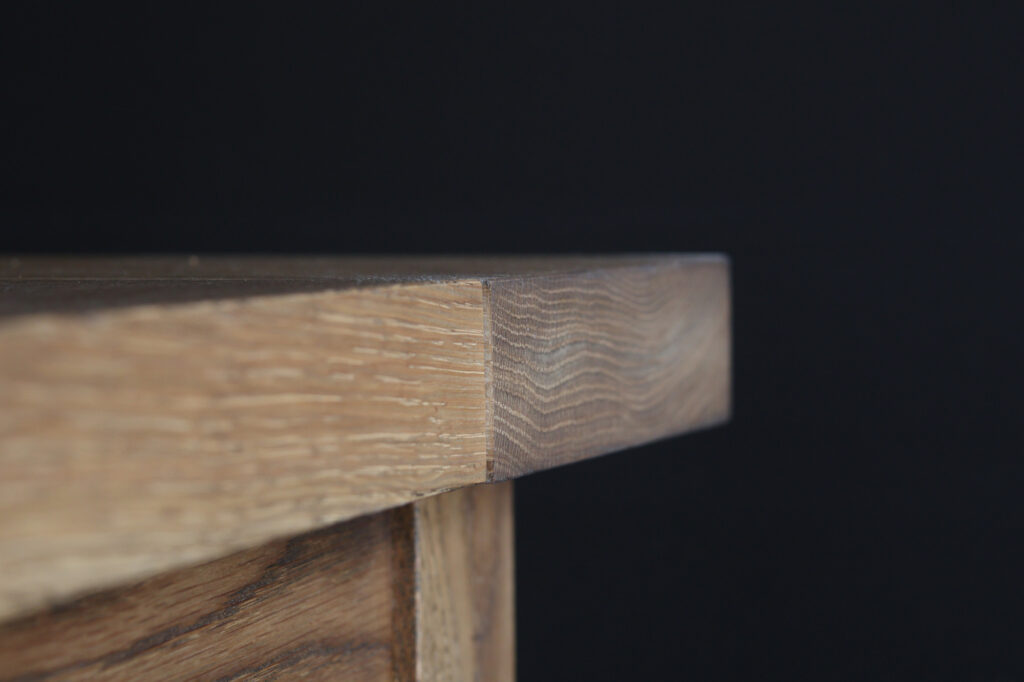
Well-designed hardwood surfaces continue to rely on the same principles today. Proper support and attachment methods help manage movement rather than restrain it completely.
Proper design and attachment methods help manage movement naturally.
View Installation Guidelines →
Color & Patina
Hardwood changes gradually as it is exposed to light, air, and daily use. Depending on the species, tones may deepen, soften, lighten, or develop warmer undertones with exposure and age.
This evolution is part of the natural character of solid wood and contributes to the individuality of each surface.
Finish & Maintenance
Different finishes protect wood differently and develop their own character with use.
Compare Wood Finish Options →
Drying oils such as tung oil absorb into the wood fibers and cure within the surface itself. Hard-wax oil finishes combine oils and waxes to create a more durable, repairable surface while preserving the look and feel of the wood. Mineral oil does not cure and therefore requires more frequent application, particularly on food-preparation surfaces and end grain construction.
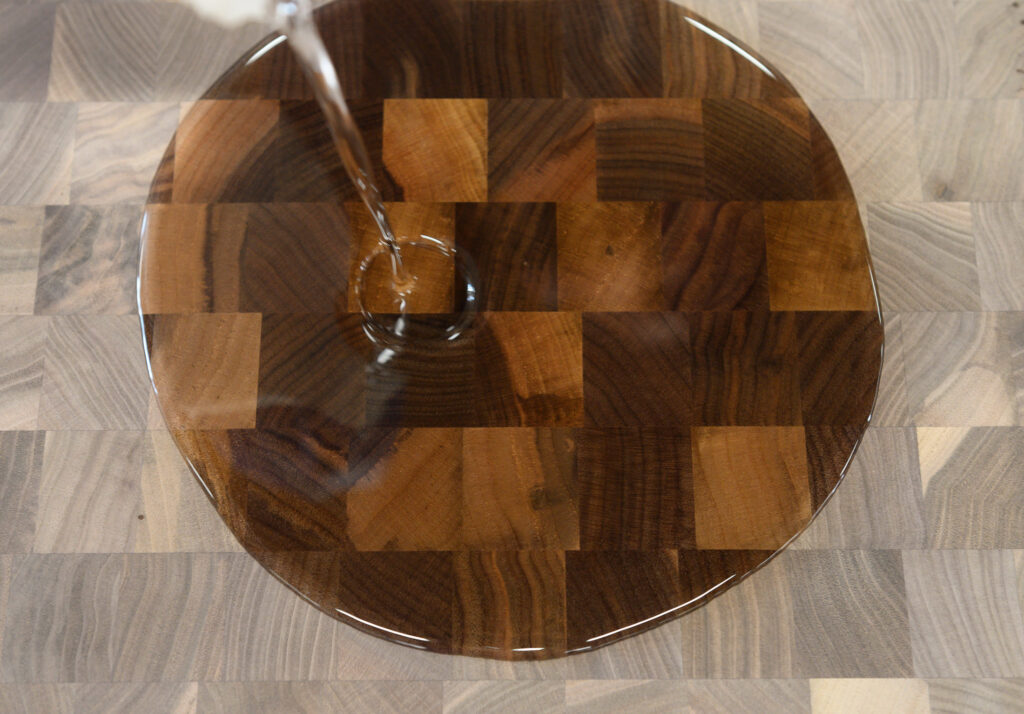
All finishes wear in high-use areas. The appropriate maintenance approach depends on the finish system, level of use, and environmental conditions.
Regular care helps reduce moisture absorption, staining, and excessive drying while preserving the appearance and performance of the wood.
Repair & Refinishing
Because these are solid wood surfaces, not veneers, many forms of wear can be repaired.
Minor scratches and knife marks can often be improved with spot repair and maintenance. Small dents may sometimes be reduced by steaming the affected area with a damp towel and household iron, allowing compressed wood fibers to expand.
Sanding and refinishing can address more significant wear, discoloration, and finish breakdown while preserving the original solid wood beneath.
If a surface requires restoration, we recommend contacting us or a qualified furniture refinishing professional.
Long-Term Expectations
Solid wood is not expected to remain unchanged. Variation, movement, patina, and visible use are part of the material’s natural lifecycle.
Well-made hardwood surfaces are intended to remain useful, maintainable, and worth keeping through changing spaces, evolving style, and decades of daily life.
Explore Philosophy & Materials →


